
Artificial intelligence is evolving quickly, and Agentic AI is one of the most important developments in this space. Instead of simply responding to prompts like traditional AI tools, these systems can set goals, plan steps, and complete tasks independently.
For developers, startups, and tech teams, this shift means AI is no longer just a helper tool. It can now act more like a digital teammate that handles repetitive work and supports complex workflows.
As AI adoption grows in India and globally, understanding how autonomous AI systems work is becoming an important skill for students, developers, and professionals exploring careers in artificial intelligence.
Table of Contents
What is Agentic AI
Agentic AI refers to AI systems designed to operate as autonomous agents capable of setting goals, making decisions, and executing tasks independently.
Unlike traditional AI models that only generate responses, Agentic AI combines multiple components to perform real work. These systems typically include:
- A large AI model for reasoning
- Memory to store context
- Access to tools and external systems
- A defined goal
- The autonomy to take actions
With these capabilities, Agentic AI can plan tasks, monitor results, and adjust strategies while working toward a goal.
For example, in a software development environment, an AI agent might:
- Write code
- Run tests
- Fix errors
- Update documentation
- Deploy the application
All while coordinating these steps without constant human instructions.
How AI Agents Work
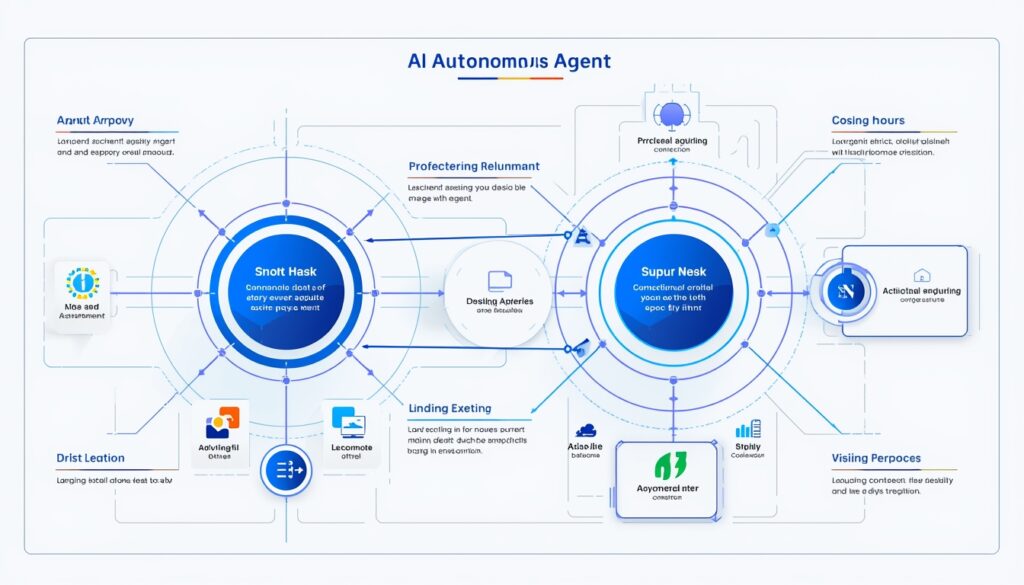
Agentic AI follows a structured process that allows it to convert goals into actions.
1. Receives a Goal
Every Agentic AI system begins with a clearly defined goal. This goal is usually given through natural language instructions.
Examples include:
- Build a feature for a web application
- Generate and test code
- Monitor system performance
The clearer the goal, the more efficiently the AI agent can plan its tasks.
2. Breaks Down Tasks
Once the goal is understood, the Agentic AI system divides it into smaller steps.
For example, if the goal is to build a feature, the AI agent may:
- Design the logic
- Write the code
- Run automated tests
- Fix errors
- Prepare documentation
This step-by-step planning allows the AI agent to manage complex workflows.
3. Uses Tools and Context
Agentic AI systems connect with external tools such as:
- Code repositories
- Terminals
- APIs
- Databases
- Scheduling systems
The AI also uses memory to keep track of previous steps and maintain context throughout the process.
4. Takes Autonomous Action
Unlike basic generative AI tools that only produce text or images, Agentic AI executes tasks.
For example, an AI agent can:
- Modify files
- Run scripts
- Deploy applications
- Monitor performance
It continues working until the goal is completed.
5. Learns and Improves
Agentic AI systems constantly evaluate results and improve future actions.
In software development, feedback loops such as testing and error detection help the AI system refine its output.
This allows Agentic AI to gradually improve accuracy and efficiency over time.
Agentic AI vs Generative AI
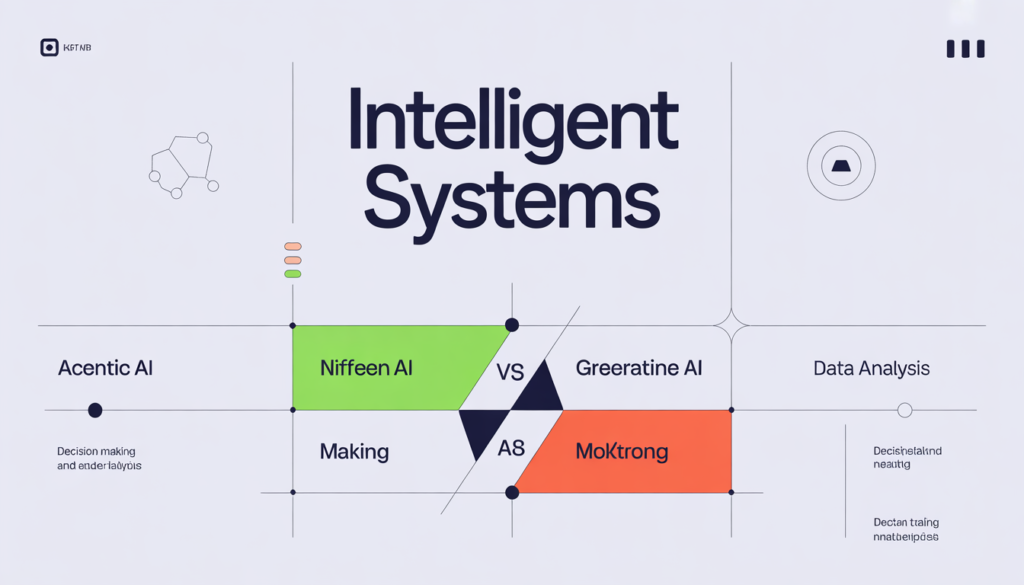
Although both technologies are built on advanced AI models, their roles are different.
| Feature | Agentic AI | Generative AI |
|---|---|---|
| Primary Purpose | Execute tasks autonomously | Generate content |
| Workflow | Multi-step task execution | Single response output |
| Autonomy | High | Low |
| Use Cases | Automation, operations, decision making | Writing, image creation, idea generation |
| Examples | AI agents, workflow automation | ChatGPT, image generators |
Generative AI tools like ChatGPT help create content based on prompts.
Agentic AI extends these capabilities by allowing systems to take actions and manage workflows.
For students exploring AI careers, understanding this difference is important because the future of automation will increasingly rely on AI agents rather than simple AI assistants.
Benefits of AI Agents
Agentic AI brings several advantages for software teams and businesses.
Increased Efficiency
AI agents can perform repetitive tasks such as testing, debugging, and code reviews. This significantly reduces manual work.
Scalable Automation
Agentic AI can handle complex workflows that traditional automation tools cannot manage. These systems adapt to changing inputs and conditions.
Faster Decision Making
Because Agentic AI monitors processes in real time, it can quickly respond to new data and adjust workflows.
Focus on High-Value Work
By automating routine tasks, developers and engineers can focus on strategy, architecture, and innovation.
Risks of Autonomous Systems
Despite its benefits, Agentic AI also introduces several challenges.
Prompt Injection
Attackers could manipulate AI agents using hidden prompts that alter their behavior.
Data Security Risks
Agentic AI systems often access multiple tools and databases. Without proper controls, sensitive information could be exposed.
Bias and Misalignment
AI agents trained on biased data may make unfair decisions. Misaligned goals can also cause systems to take actions that conflict with human intentions.
API Security Issues
Because AI agents connect to many services through APIs, weak security controls could allow unauthorized access.
Organizations deploying Agentic AI must implement strong governance, monitoring, and ethical guidelines.
For a deeper technical explanation of AI agent architectures, you can explore the guide published by the World Economic Forum on artificial intelligence systems.
https://www.weforum.org/stories/2026/03/how-to-prepare-for-an-agentic-ai-driven-future/
Since agents rely on APIs, poor security controls could lead to system vulnerabilities.
For a deeper technical overview of AI agents, you can explore this resource:
https://www.ibm.com/think/topics/ai-agents
Real-World Use Cases of Agentic AI
Agentic AI is already being applied across several industries.
Software Development
AI agents can help developers by:
- Generating code
- Reviewing pull requests
- Detecting bugs
- Optimizing CI/CD pipelines
Tools like AI coding assistants are already moving toward agent-based systems.
Healthcare
Agentic AI systems can assist with:
- Patient data analysis
- Medical documentation
- Appointment scheduling
- Real-time monitoring
These systems help reduce administrative workload for healthcare professionals.
Finance
Banks and fintech companies are experimenting with Agentic AI to:
- Detect fraud
- Automate customer service
- Monitor transactions
AI agents can react instantly when suspicious activity is detected.
Manufacturing
In industrial environments, Agentic AI helps manage supply chains and predictive maintenance.
Sensors connected to AI systems can automatically schedule repairs before equipment fails.
Future of Intelligent Automation
Agentic AI is expected to evolve rapidly in the coming years.
Several trends are shaping its future.
Hyperautomation
Agentic AI will combine with robotic process automation to create fully automated workflows across organizations.
Multi-Agent Systems
Instead of a single AI agent, companies will deploy networks of specialized agents working together.
For example:
- Inventory agents
- Finance agents
- Customer support agents
Each agent manages a specific responsibility.

Self-Improving Systems
Future Agentic AI systems will adapt their strategies automatically using performance data.
This could lead to self-optimizing business operations.
Integration with IoT and Cloud
AI agents connected to IoT devices will make real-time decisions in industries such as manufacturing and logistics.
How to Start Learning Agentic AI
As Agentic AI becomes more widely adopted, professionals who understand AI systems, automation workflows, and machine learning will have strong career opportunities.
Students and early professionals in India can begin by building foundational skills in:
- Artificial Intelligence
- Machine Learning
- Python programming
- Data science
- Cloud computing
For learners who want structured guidance, platforms like HelloGrowing help students understand practical digital skills and real-world AI applications through guided learning paths and career-focused programs.
A structured learning path can make this journey much easier. Platforms like HelloGrowing help learners understand practical AI concepts and build job-ready skills through guided learning and career-focused programs.
If you are interested in building real AI skills, you can explore this learning roadmap:
HelloGrowing Agentic AI Roadmap
This guide explains how beginners can start learning AI, build projects, and prepare for careers in fields like machine learning and AI engineering.
Conclusion
Agentic AI represents a major shift in how artificial intelligence is used in real-world systems.
Instead of simply generating outputs, Agentic AI systems can plan, act, learn, and complete tasks independently. This capability makes them powerful tools for automation, software development, and operational efficiency.
As industries adopt AI agents across different workflows, professionals who understand Agentic AI will have a strong advantage in the future job market.
Learning how AI agents work today can help students and developers prepare for the next generation of intelligent systems. Platforms like HelloGrowing aim to guide learners toward these practical, future-ready skills through structured education and career-focused training.
Frequently Asked Questions About Agentic AI
1. What is Agentic AI in simple words?
Agentic AI refers to artificial intelligence systems that can plan tasks, make decisions, and execute actions independently to achieve a goal. Unlike traditional AI tools that only respond to prompts, Agentic AI can manage multi-step workflows and interact with tools, APIs, and software systems.
2. How is Agentic AI different from Generative AI?
Generative AI focuses on creating content such as text, images, code, or videos based on prompts. Agentic AI goes a step further by taking actions and completing tasks autonomously. Instead of generating a single response, it can plan multiple steps and complete an entire workflow.
3. What are some real-world examples of Agentic AI?
Agentic AI is already being used in several industries, including:
1. Automated software development workflows
2. Fraud detection in finance systems
3. AI-powered customer support automation
4. Healthcare administrative automation
5. Supply chain and logistics management
These systems help organizations automate complex operations and improve efficiency.
4. Is Agentic AI important for future careers?
Yes. As AI systems become more autonomous, companies are looking for professionals who understand AI automation, machine learning, and AI agent development. Learning these technologies can open opportunities in roles like AI developer, automation engineer, and machine learning engineer.
5. How can beginners start learning AI and automation?
Beginners can start by learning Python programming, machine learning fundamentals, and AI tools used for automation and data analysis. Structured learning platforms such as HelloGrowing help students build practical AI skills through guided learning paths and real-world projects.
6. What industries will benefit the most from Agentic AI?
Several industries are expected to benefit from autonomous AI systems, including:
1. Software development
2. Finance and fintech
3. Healthcare
4. Manufacturing
5. E-commerce
6. Logistics and supply chain
These sectors rely heavily on automation and real-time decision making.
7. Will Agentic AI replace human jobs?
Agentic AI is more likely to assist professionals rather than replace them completely. It helps automate repetitive tasks so that people can focus on strategic thinking, innovation, and problem solving.

